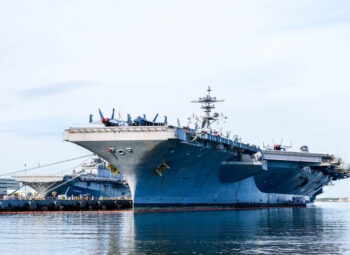



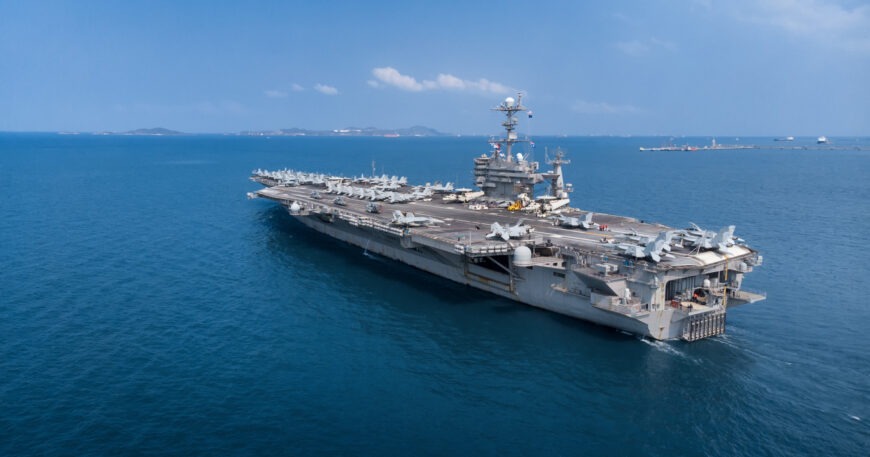
Similar to cruise ships also belong to aircraft carrier among the most complex and largest ships sailing the world's oceans. They are floating airfields, accommodate several thousand people and form the heart of modern maritime power projection. Aircraft carriers are at the heart of naval strike groups, enabling reconnaissance, air superiority, protection from attack and precision strikes against targets hundreds of kilometres away.
Although Germany does not have its own aircraft carrier, it benefits indirectly from these large combat ships. The German Navy regularly operates in multinational formations together with allied carriers, and German ships are an integral part of such combat groups.
Also for the German industry aircraft carriers play a role: German companies supply technologies, components and concepts that have been incorporated into aircraft carrier programmes in France, the United Kingdom and the United States. In principle, German shipyards are technically capable of building aircraft carriers – provided that the political and legal framework conditions allow this.
What types of aircraft carriers are there?
When people talk about aircraft carriers, many immediately think of the enormous fleet carriers of the US Navy. However, these giants are only the tip of a wide range of types.
Baby carriers – small carriers for limited areas of use
At the lower end of the scale are so-called baby carrier. They are also referred to as maritime patrol vessels, anti-submarine warfare carriers or STOVL carriers. Their displacement starts at around 14,000 tonnes. They do not have nuclear propulsion, which limits their range and speed.
The main task of these vessels is to control limited sea areas. To this end, they primarily use helicopter supplemented by a few light aircraft. They are not designed for combat against large enemy surface combat groups, but rather for surveillance, security and anti-submarine warfare.
Anti-submarine warfare: a core task of the baby carriers
A key area of application for baby carriers is submarine hunting. Their helicopters can monitor large sea areas using modern sensor technology:
- ditchable sonar buoys
- submersible sonars
- Magnetic and noise detection
If a submarine is detected, the helicopter can bring in additional air or sea units. Often, a so-called Hunter and a killer Together: While the Hunter pursues the target, the Killer attacks with torpedoes that autonomously track and engage the submarine.
STOVL carriers: Aircraft on short decks
Many baby carriers and amphibious carriers rely on STOVL aircraft. STOVL stands for Short Take-Off and Vertical Landing. These aircraft require only short take-off distances and can land vertically.
Previous representatives were the harrier, Today, it is primarily the F-35B These aircraft generate both propulsion and lift through swivelling engine outlets. This allows even smaller ships to operate aircraft, albeit with restrictions in terms of range, payload and operating time.
Typical STOVL carriers are:
- the British Invincible class
- the Italian carrier Cavour
- the British Queen Elizabeth class with HMS Queen Elizabeth and HMS Prince of Wales
With around 80,000 tonnes Displacement: these modern STOVL carriers are significantly larger than classic baby carriers, but still do not use catapults.

Amphibious carriers – airfield and landing ship in one
A special form is amphibious carriers They combine a continuous flight deck with an internal dock. This dock can accommodate smaller landing craft that bring troops, vehicles and equipment ashore.
Such ships are primarily used for Landing of soldiers, but at the same time take on tasks as:
- helicopter carrier
- STOVL attack platform
- anti-submarine warfare carrier
A well-known representative is the French Mistral class, which currently operates mainly helicopters, but is structurally designed as a light carrier.
STOBAR carriers – launch via ramp, landing with arresting wires
Another category is STOBAR carrier (Short Take-Off But Arrested RecoveryThese ships do not use catapults. Aircraft take off via a ramp in the bow area and land on an angled deck with the aid of arresting wires.
This type is not used by Western navies, but is common in:
- Russia
- China
- India
STOBAR carriers represent a technical compromise, but are limited in terms of operational flexibility.
Aircraft carriers – the largest ships on the world's oceans
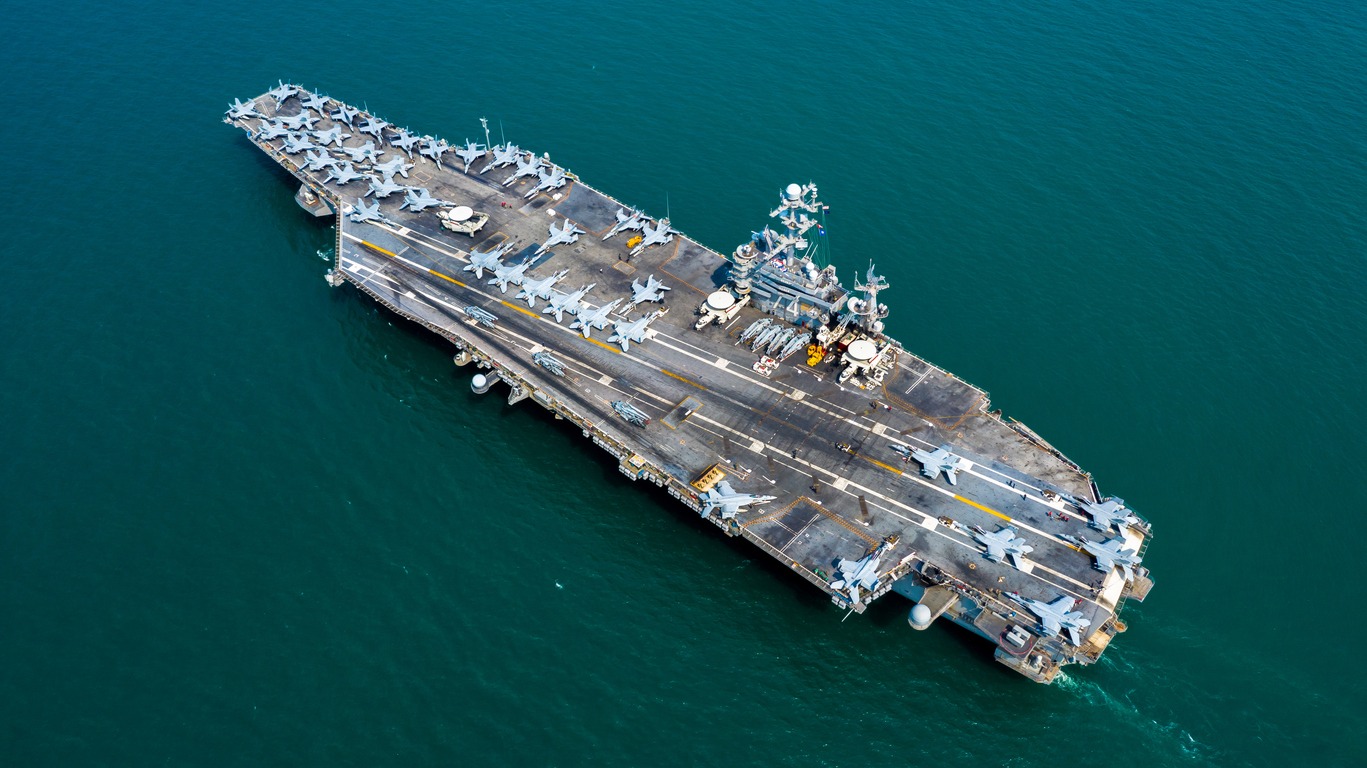
The most powerful carrier type is the aircraft carrier. These ships regularly exceed 80,000 tonnes, often even 100,000 tonnes displacement. You have:
- nuclear propulsion
- virtually unlimited range
- Catapults (steam or electromagnetic)
- Catch ropes for landings
- up to 100 aeroplanes and helicopters
The best-known examples are the carriers of the US Navy, such as the Ford and Nimitz classes.
France also operates a fleet carrier: the Charles de Gaulle. Despite a comparatively low displacement of around 42,000 tonnes it has nuclear propulsion, catapults and around 40 aircraft.
Conclusion: Floating masterpieces of engineering
Aircraft carriers are technical and organisational masterpieces. From compact baby carriers to amphibious platforms and huge fleet carriers, they cover a wide range of applications. They combine shipbuilding, aviation, electronics and logistics at the highest level and continue to shape global naval power to this day.
In the next article, we will take a closer look at the technical innovations and systems that make these floating giants possible in the first place.
Zeitarbeit International offers Tailor-made solutions for companies in the shipbuilding industry. As an experienced partner in international recruitment, we support you in your search for qualified specialists – including applicant management, security checks and project-based staffing. Trust in our expertise and our network – we accompany you from the job advertisement to the successful recruitment.