



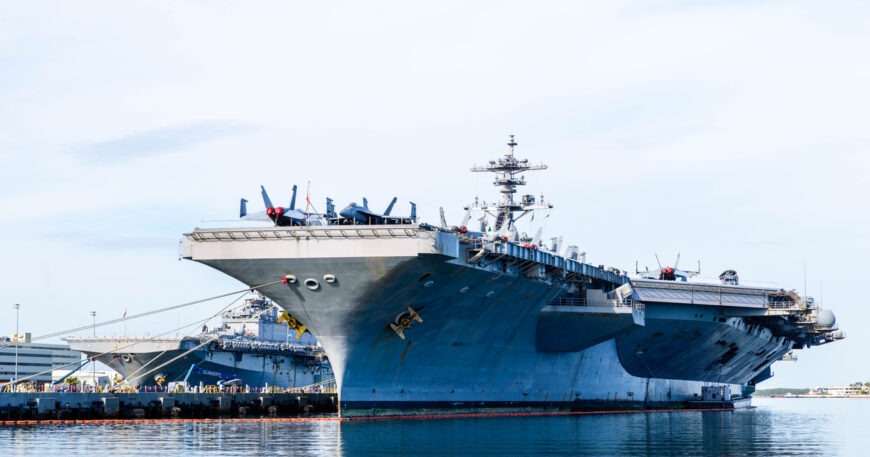
Aircraft carriers are among the most complex technical constructions, that modern shipbuilding has produced. They are not just warships, but Floating airbases, that can operate permanently on the high seas.
Having already dealt with the basics and dimensions of aircraft carriers in the previous article, we will now take a closer look at the technical Requirements, which On-board systems and the complex logistics, that make the construction and operation of a carrier possible in the first place.
Different beam types and their technical requirements
A distinction is made between different types of support depending on the intended use and design. The Displacement ranges from about 14,000 tonnes for smaller carriers up to over 100,000 tonnes for large fleet carriers. With increasing size, not only the number of aircraft increases, but also the technical, structural and logistical requirements exponentially.
Even though Germany does not operate any aircraft carriers itself, German shipyards have the necessary expertise to develop smaller carrier concepts - such as so-called baby carrier - to develop and build. These include, among others:
- Radar and sensor systems
- Navigation and ship handling systems
- Drive technology and energy supply
- Flight operations and air traffic control systems
In cooperation with allied nations, it would therefore be technically possible to design and realise a complete aircraft carrier.
The aircraft carrier as a floating city
A modern aircraft carrier is more than one ship. It resembles a small town on the sea. There are several thousand people on board who fulfil a wide variety of tasks:
- Operation and maintenance of ship systems
- Flight operations and aircraft maintenance
- Air traffic control and mission coordination
- Safety and weapon system operation
This enormous personnel density places high demands on Supply, accommodation, safety and organisation.
The flight deck - the centrepiece of every aircraft carrier
The Landing deck is the main reason for the existence of an aircraft carrier and at the same time one of the most heavily used structures on board.
Extreme loads during landing
Modern carrier aircraft weigh on landing 30 tonnes or more. They hit the deck at high speed and at maximum engine power. This is particularly challenging with:
- STOVL aircraft, that land vertically or short
- Conventional carrier aircraft with catch hooks
For STOVL landings, the aircraft stands on a stabiliser during landing. extremely hot and powerful exhaust gas jet, which could permanently damage the deck if it was not specially designed.
Catch rope landings - maximum material stress
In classic carrier landings, the pilot powers up the engines shortly before touchdown Full power, as the deck is not long enough for a through launch. If the arresting hook misses the arresting cables, the hot exhaust jets slide over the total deck length, before the aircraft takes off again at the end. The deck has to withstand all these loads permanently and repeatedly endure.

Hangar deck, lifts and internal logistics
Directly below the landing deck is the Hangar deck. Aircraft are made here:
- parked
- maintained
- armed
- prepared for use
Transport between the hangar and flight deck is provided by huge lifts for use. A single lift can transport two fighter planes or three helicopters at the same time - with a Lifting capacity of over 60 tonnes. Modern carriers have at least two, but often three or four such lifts.
There are also smaller lifts that transport weapons from the arsenals deep in the ship safely to the hangar or directly to the flight deck.
Fuel, arsenals and command centres
Another critical factor is the Refuelling the aircraft. Kilometres of fuel lines and powerful pump systems run through the ship to make the engines ready for use in the shortest possible time.
The Arsenals themselves are heavily armoured and designed to keep explosions as isolated as possible. Also Command centres are available in multiple redundant versions so that the carrier itself capable of leadership remains. There are also electronic jamming systems, air defence systems and close-range defence.
Planning, construction and system integration
The design of an aircraft carrier requires the co-operation of numerous disciplines:
- Naval architects
- Aviation experts
- Weapons technicians:
- Logistics and security specialists
This involves not only drawing up construction plans, but also developing operating concepts, maintenance procedures and emergency strategies. The aim is to make the carrier permanently operational mobile air base to lay out.
Complex construction processes and global logistics
The construction of an aircraft carrier is a major logistical project. Thousands of components and systems have to be ordered, manufactured, transported and installed on schedule. Prefabricated fuselage segments are assembled, while machinery, electronics, radar and weapon systems are installed in parallel. This is followed by system tests, simulations of flight operations and safety and emergency procedures. No wonder, then, that the construction of an aircraft carrier many years is utilised.
Conclusion
Aircraft carriers are among the most technically demanding and logistically complex constructions, that man has ever created. They combine shipbuilding, aviation, electronics, weapons technology and logistics in a very small space. Their construction requires not only enormous financial resources, but also Decades of experience and international cooperation.
Zeitarbeit International offers Tailor-made solutions for companies in the shipbuilding industry. As an experienced partner in international recruitment, we support you in your search for qualified specialists – including applicant management, security checks and project-based staffing. Trust in our expertise and our network – we accompany you from the job advertisement to the successful recruitment.
