


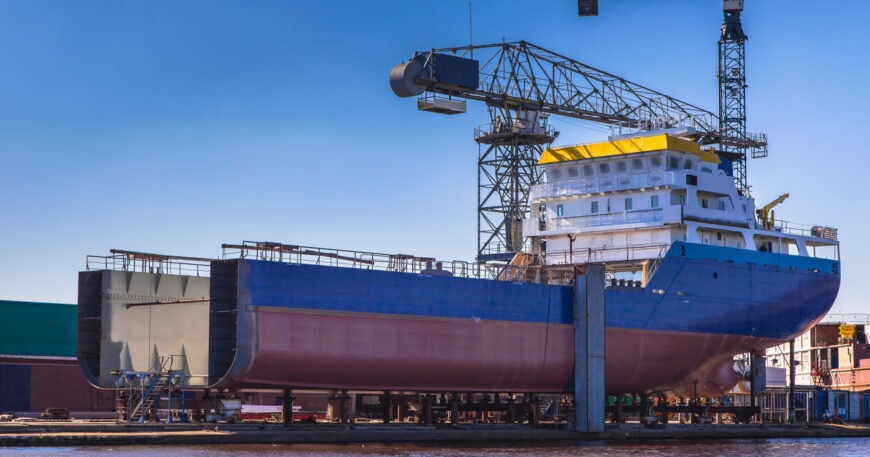
The maritime industry has always been one of the cornerstones of German industry. With its strong technological focus, decades of shipbuilding tradition and export-oriented value creation, Germany is regarded worldwide as a reliable partner for high-quality maritime solutions. The industry creates jobs, enables global trade and drives innovation – from energy-efficient ship propulsion systems to state-of-the-art offshore installations.
Why the maritime industry is so important for Germany
Shipbuilding makes a significant contribution to gross domestic product. It is closely linked to numerous supplier industries, research institutions and universities. Many academic careers deliberately end in the maritime industry, as it offers attractive, technologically demanding career paths.
In addition, the maritime industry strengthens Germany's international reputation: ships and systems made in Germany stand for quality, reliability and technological leadership.
Innovation, Industry 4.0 and the path to green shipping
The industry is undergoing dynamic change. New requirements are arising due to:
- stricter climate targets,
- lower-emission drive systems,
- the expansion of renewable energies (e.g. offshore wind energy),
- as well as increasing digitalisation.
Technologies such as augmented reality, automation and artificial intelligence increase efficiency, precision and safety in ship production. The result: greater competitiveness and rising global demand for German ship systems.
The growing shortage of skilled workers – the biggest challenge
Despite positive market developments, the industry is struggling with a structural problem: a shortage of skilled workers. Demographic change, changing expectations of modern working models and migration to other industrial sectors are exacerbating the situation.
Companies are already responding with:
- automation,
- flexible working time models,
- Temporary work and service contracts,
- international recruitment, particularly from Eastern Europe and Asia.
This shows particularly clearly that without strategic recruitment, the German shipbuilding industry will not be able to secure its leading role in the long term.
International skilled workers as an opportunity for the maritime industry
In highly specialised industries such as shipbuilding, access to internationally qualified specialists is crucial. Companies that rely on foreign experts benefit from:
- faster filling of critical positions,
- high level of motivation and professional competence,
- Cost advantages with simultaneous quality assurance,
- a more stable and resilient staffing model.
Global Business Recruiting supports maritime companies in finding precisely these skilled workers – legally compliant, efficiently and for the long term. From welders and engineers to electricians and production workers, we offer tailor-made solutions for securing skilled workers.
Conclusion
The maritime industry remains a key sector in Germany – characterised by innovation, global significance and technological leadership. However, the future viability of the industry depends crucially on overcoming the shortage of skilled workers. Those who focus on international recruitment at an early stage gain a strategic advantage in global competition.
Global Business Recruiting accompanies you on this journey – with effective recruitment processes, reliable expertise and access to qualified specialists worldwide.