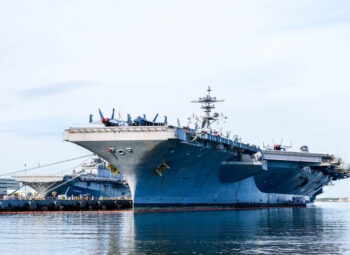




Destroyers are a central component of modern navies. At the same time, there is a certain lack of clarity in the use of the term today. For many decades, warships were clearly categorised according to size or purpose. This resulted in a large number of different ship classes, some of which disappeared over time, while others were merged.
With the increasing standardisation of military structures, many navies changed their nomenclature. As a result, numerous combat ships are now referred to as „frigates“ - regardless of whether they correspond to classic destroyers in terms of size, armament and task. It is particularly noteworthy that the term "frigate" originally came from the era of sailing ships, later fell out of fashion and is now used again as a modern collective term.
Concept, categorisation and current significance of destroyers
According to today's official classification, Germany has no destroyers. Instead, the navy operates frigates, which can easily be categorised as destroyers due to their dimensions, sensor technology and operational profile. This leads to the justified statement that Germany does in fact have destroyers - even if they are formally labelled differently.
Regardless of the nomenclature, German shipyards are technically and industrially capable of building ships that fulfil the classic characteristics of modern destroyers. The final classification always lies with the client and is less a technical than a doctrinal decision.
German frigates as de facto destroyers
A common approach to categorising destroyers is size. In many navies, ships with a displacement of around 4,000 to 5,000 tonnes or more are considered destroyers. The German Brandenburg class already exceeds the 4,000 tonne mark when fully loaded, while the Sachsen class is well over 5,000 tonnes.
Even in an international comparison, these ship classes are clearly in the range of classic destroyers. Their dimensions, their range and their extensive equipment correspond to what is understood by a destroyer in other navies.
Mission profile of modern destroyers
In addition to size, the intended use plays a decisive role. Modern destroyers are known as 3D ships. They are capable of fighting in three dimensions: in the air, on the surface and under water. This gives them a central role within maritime task forces.
The German frigates fully fulfil these requirements. They have powerful air defence systems, extensive capabilities for combating surface ships as well as modern sensor technology and weapons for submarine hunting. This enables them to perform a wide range of tasks independently or as a command unit within a formation.
Sensors, guidance and range
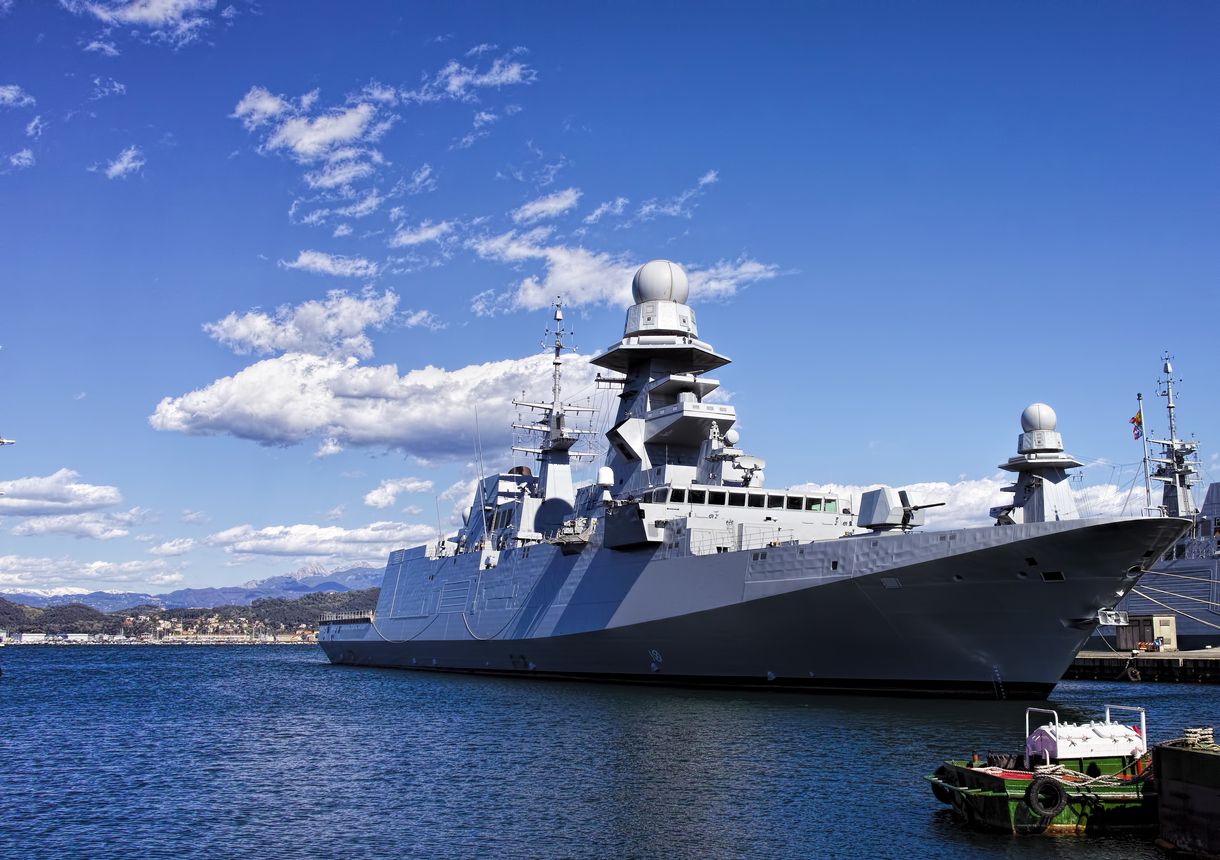
A key feature of modern destroyers is their command and control capability. They have powerful radar and sonar systems, comprehensive means of communication and high computing capacities. This enables them to monitor large sea areas, recognise threats at an early stage and coordinate other units.
The operational range is also considerably extended by on-board helicopters. Destroyers usually have a landing deck at the stern as well as a hangar for one or two helicopters. These enable far-reaching reconnaissance of sea and underwater targets and contribute significantly to the flexibility of the ship.
The helicopter and ship are fully integrated into a joint battle management system. Targets can be reconnoitred by the helicopter and engaged by the ship or vice versa, which significantly increases the effectiveness of the overall system.
Armament of modern destroyers
Vertical Launch Systems (VLS) form the centrepiece of the armament of modern destroyers. These vertical launch systems carry guided missiles for air defence, anti-submarine warfare and other mission profiles. The vertical launch allows the missiles to align themselves with their target immediately after launch.
Large anti-aircraft missiles reach ranges of over 100 kilometres and are usually loaded individually per cell. Smaller missiles with ranges of between 20 and 50 kilometres can be used as quad packs, which significantly increases the number of available missiles.
A typical European configuration comprises four VLS modules with eight cells each, i.e. a total of 32 cells. Of these, 24 cells are often equipped with long-range air defence missiles. The remaining cells can be loaded with shorter-range quadpacks, which can increase the total number of missiles to over 50.
Special missiles are available for anti-submarine warfare, which transport a torpedo into the vicinity of a localised target and release it there. This is supplemented by torpedo tubes for close-range protection. Anti-ship missiles, which are usually mounted in inclined launch containers on deck, are used against surface ships.
Destroyers also have systems for close-range defence. These include Close-In Weapon Systems (CIWS), which automatically combat approaching threats such as missiles or drones, as well as machine guns for defence against small boats. Depending on the class of ship, the main artillery is usually in the 127 mm or 76 mm calibre range and is used to engage land and sea targets.
Conclusion
The modern destroyer is less a clearly defined class of ship than a functional concept. Today, size, armament, sensor technology and command and control capabilities are more important than the official designation. In this context, there are numerous overlaps between classic destroyers and modern frigates.
German frigates fulfil the requirements placed on destroyers internationally in many respects. They have comprehensive 3D combat capabilities, powerful command and sensor systems and armament that allows them to be deployed in complex maritime scenarios. This makes them an integral part of modern task forces and enables them to perform tasks that go far beyond self-protection.
For shipyards and clients, this means that the construction of modern destroyers depends less on classification and more on the ability to reliably integrate highly complex systems. Modular construction methods, the safe integration of sensitive technologies and close coordination between design, equipment and operational doctrine are crucial. This environment shows that modern shipbuilding expertise is not tied to concepts, but to technical and organisational performance.
Zeitarbeit International offers Tailor-made solutions for companies in the shipbuilding industry. As an experienced partner in international recruitment, we support you in your search for qualified specialists – including applicant management, security checks and project-based staffing. Trust in our expertise and our network – we accompany you from the job advertisement to the successful recruitment.