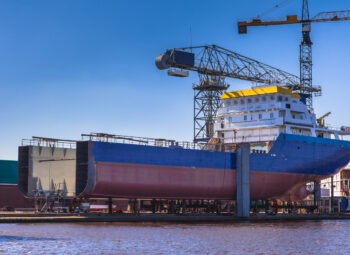



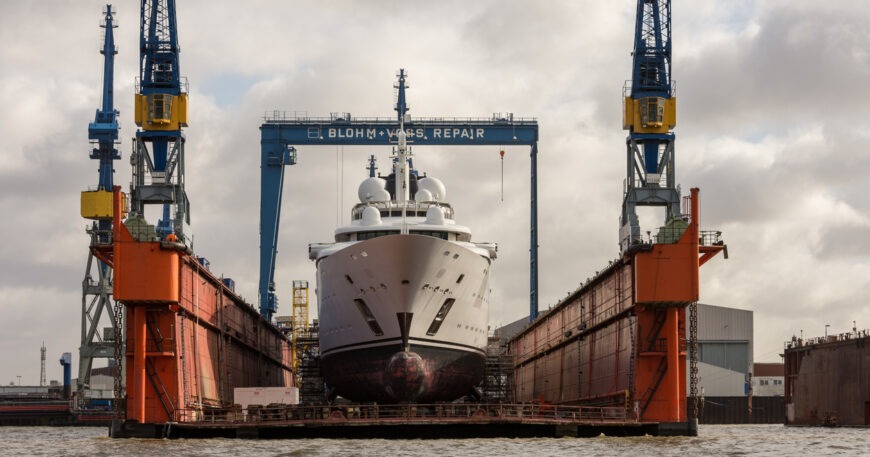
Shipbuilding has been one of Germany's most important industries for decades. This is particularly evident in the fact that specialised ships are built here that are in demand worldwide – from impressive cruise ships and luxurious yachts to state-of-the-art naval vessels.
Shipyards such as Meyer Shipyard, Lürssen/NVL Group or Thyssenkrupp Marine Systems (TKMS) enjoy an excellent international reputation. They stand for quality, innovation and reliability and consistently have full order books. At the same time, the government supports their most technologically advanced projects in order to strengthen the industry in the long term.
In this article, we take a look at what characterises German shipbuilding – and why it is more important today than ever before.
What characterises German shipbuilding?
The German shipbuilding industry is characterised by large, long-established companies with decades of expertise, extensive experience and state-of-the-art technologies. They are particularly strong in segments where quality and technical innovation are crucial:
- cruise ships
- luxury yachts
- naval vessels
At the same time, there is a broad middle class. Many of these companies are family-run and highly specialised. They cover niches such as Construction of inland waterway vessels or other smaller specialised vessels, which are mainly used on rivers and lakes.
From crisis to recovery
After a difficult phase – triggered by an oversupply of shipping capacity and exacerbated by the pandemic-related slump in global trade – the industry is now experiencing a significant upswing.
Global trade is picking up again, demand for shipping capacity is rising, and the maritime economy is at an all-time high. Even discussions about tariffs are doing little to change this. Goods need to be transported – the question is where the ships will go, not whether they will be built.
Why Germany benefits
Despite higher wages and social security contributions, Germany remains strong in specialised shipbuilding. The reason: Quality and innovation.
Another factor is government support, including through the Federal Office of Economics and Export Control (BAFA). The funding focuses on:
- innovative ship designs,
- new offshore designs,
- modern manufacturing processes,
- advanced systems on board.
The aim is to secure the international competitiveness of German shipyards, preserve jobs and, at the same time, expand strategic capacities for the future.
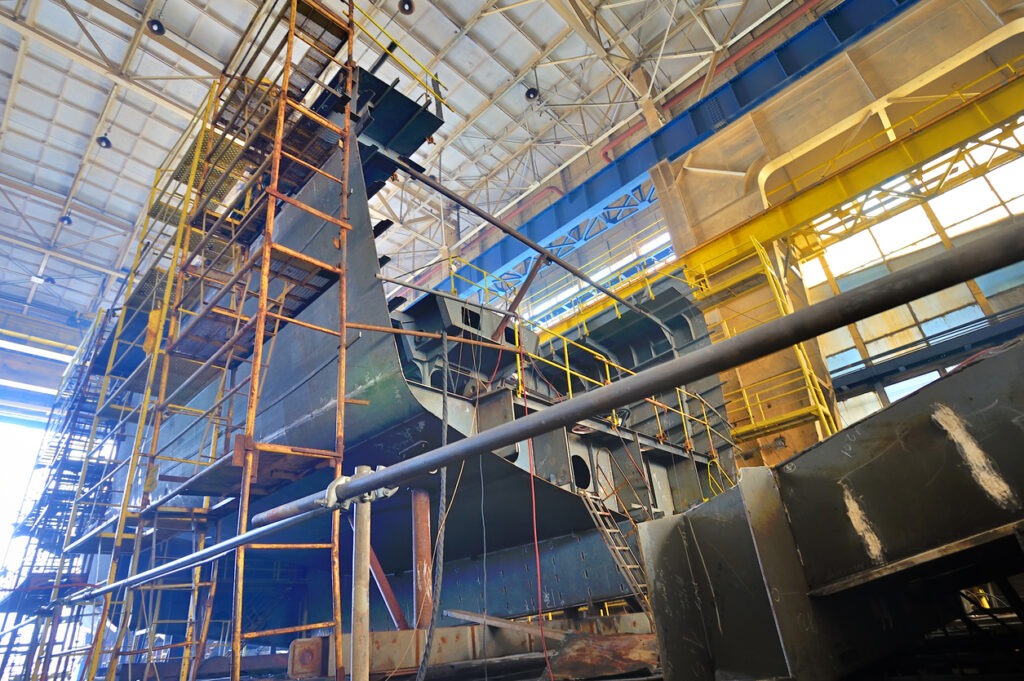
Why a strong national shipbuilding industry is important for security policy
The German government's maritime strategy relies heavily on its own naval industry. A strong navy requires an independent, national industry that develops, builds, maintains and modernises ships.
If German naval vessels were built abroad, this would create a dependency on:
- spare parts deliveries,
- Maintenance cycles,
- technical updates,
- political influence.
Manufacturers of military technology often reserve the right to have a say in how their products are used – a risk that Germany wants to avoid. A sovereign shipbuilding industry is therefore a strategic component of national security.
The German shipbuilding industry at a glance
Two factors particularly characterise the sector:
1. Global leadership in specialised vessels
German shipyards are often number one in their segments. Anyone planning to build a superyacht monument goes to Lürssen. For innovative cruise ships, there is no way around the Meyer Shipyard And if you need state-of-the-art naval vessels, TKMS is the right place to go.
2. High cost pressure due to international competition
Asian shipyards, particularly in China and South Korea, are benefiting from:
- lower costs,
- more affordable infrastructure,
- huge production volumes.
The resulting economies of scale make it almost impossible to compete in the standardised mass market. That is why Germany focuses on areas where quality is more important than price.
Conclusion: Quality beats quantity – and makes Germany indispensable
Today, the German shipbuilding industry is highly specialised, a technological leader and in demand internationally. It has overcome the crisis by focusing on what it does best: build complex, high-quality and innovative ships, that are unrivalled worldwide.
This means that German shipbuilding remains not only economically significant, but also a strategic pillar for security, technological development and industrial sovereignty.